
Hey there, future gas pros and seasoned engineers! You know, sometimes it feels like the whole world runs on numbers, and nowhere is that more true than in the gas industry.
I’ve personally seen how a single miscalculation can ripple through an entire operation, affecting everything from safety protocols to project budgets.
It’s not just about passing a certification exam; it’s about the absolute confidence that comes from knowing your calculations are spot-on, every single time.
With everything shifting towards smarter grids, advanced leak detection, and even integrating green energy, understanding the practical math behind gas systems is more vital than ever.
You’re not just crunching numbers; you’re ensuring safety, optimizing efficiency, and truly shaping the future of energy. Trust me, getting a solid grip on these practical calculation methods is your golden ticket in this evolving landscape.
We’re talking about tangible skills that literally pay off and keep you ahead of the curve. Ready to elevate your expertise and truly make an impact? Let’s dive into the essential calculations that will set you apart.
Mastering Flow Rates: The Pulse of Any Gas System

Alright, let’s kick things off with something super fundamental but often underestimated: gas flow rates. I mean, it’s not just about turning a valve and hoping for the best, right? I’ve personally seen projects go sideways, or worse, become seriously inefficient because someone glossed over the nuances of calculating how much gas is actually moving through a pipe. When you’re dealing with anything from residential gas lines to massive industrial pipelines, understanding flow rate is like knowing the heartbeat of the entire operation. It dictates everything from the size of your pipes to the capacity of your compressors and even the safety protocols you need to have in place. Getting this right isn’t just about passing an exam; it’s about real-world performance and avoiding costly mistakes down the line. Trust me, I once spent a week troubleshooting a system that was underperforming only to find out the initial flow calculations were based on ideal conditions that simply didn’t exist in the field. It was a brutal but invaluable lesson!
Understanding Volumetric vs. Mass Flow
Here’s where it can get a little tricky, but it’s crucial. We often talk about flow rates in terms of volume, like cubic feet per minute (CFM) or cubic meters per hour (CMH). But gas is compressible, right? So a cubic foot of gas at one pressure and temperature isn’t the same as a cubic foot at another. That’s why mass flow rate (pounds per hour, kilograms per second) is often the unsung hero, especially in precise applications or when dealing with varying operating conditions. I remember a time when we were commissioning a new flare stack, and the original design only considered volumetric flow. Once we accounted for the varying temperatures and pressures, the mass flow rate was completely different, requiring a total recalibration of our control valves. It’s wild how easily these details can slip through the cracks if you’re not paying close attention to the specific context.
Key Variables Affecting Flow Rate Calculations
So, what exactly impacts these calculations? Think about it: pressure, temperature, pipe diameter, length, and even the roughness of the pipe’s inner surface all play a significant role. And let’s not forget the type of gas itself – its density and viscosity are huge factors. You’ll often be using equations like Darcy-Weisbach or Weymouth, which factor in these variables to give you an accurate picture. I always tell my team to double-check their inputs. A small error in a friction factor or an incorrect temperature reading can throw your entire calculation off by a surprising margin, leading to undersized equipment or, even worse, dangerous overpressure situations. It’s an iterative process, and sometimes you just have to run the numbers a few times with slightly different assumptions to see the range of possibilities.
Pressure Dynamics: Keeping Everything Balanced and Safe
If flow rate is the heartbeat, then pressure is definitely the blood pressure of any gas system. Managing pressure effectively isn’t just about efficiency; it’s fundamentally about safety. I’ve been in situations where unexpected pressure fluctuations caused serious headaches, from damaging sensitive equipment to, in extreme cases, creating hazardous conditions. It’s not enough to just know the operating pressure; you need to understand pressure drops, static pressure, dynamic pressure, and how they all interact throughout a network. This is where the real engineering artistry comes in. You’re not just building something; you’re designing a dynamic system that needs to perform reliably under a range of conditions. For anyone aspiring to be truly indispensable in this industry, mastering pressure dynamics is non-negotiable. It’s the difference between a system that hums along efficiently for decades and one that’s a constant source of problems and potential danger.
Calculating Pressure Drop Across Pipelines
One of the most frequent calculations you’ll encounter is pressure drop. Every foot of pipe, every elbow, every valve, it all contributes to a reduction in pressure as the gas moves along. Ignoring this is a recipe for disaster. I once consulted on a project where they couldn’t get the desired flow to a remote facility, and it all boiled down to underestimating the pressure drop in a surprisingly long, winding pipeline. They had to replace pumps and reconfigure sections of the line, costing them a fortune and months of delays. We use formulas like the Panhandle or AGA equations for larger transmission lines, and more simplified methods for shorter runs, but the principle is always the same: account for friction and minor losses. It’s a constant battle against the forces of physics, but a battle we can win with accurate calculations.
Understanding and Sizing Pressure Regulators
Pressure regulators are the unsung heroes of gas systems, acting like traffic cops for pressure. They reduce high inlet pressure to a steady, lower outlet pressure, ensuring downstream equipment operates safely and correctly. Sizing them correctly is an art form itself. Too small, and you restrict flow; too large, and they might hunt or be less stable. I remember a time when we were trying to regulate pressure for a delicate analytical instrument, and an improperly sized regulator caused constant fluctuations, rendering the data useless. We had to go back to basics, look at the maximum and minimum flow rates, inlet and outlet pressures, and make sure we had enough turndown capability. It’s a classic example of how a small component can have a huge impact on overall system performance if not correctly matched to the application.
Unlocking the Secrets of BTU and Energy Content
When you’re dealing with natural gas or any other fuel gas, you’re essentially selling or using energy, right? So, understanding the energy content – typically measured in British Thermal Units (BTUs) or joules – is absolutely critical. It’s not just an academic number; it directly impacts billing, combustion efficiency, and even the design of your burners and boilers. I’ve often seen folks in the field who can quote pressures and flows but get a bit hazy when it comes to the energy value. But think about it: if the energy content of your gas drops, your customers are getting less bang for their buck, or your industrial processes might not reach target temperatures. This is where the chemistry of the gas really meets the practical engineering. For me, it was a lightbulb moment when I realized that all the complex calculations ultimately tied back to delivering a consistent energy product.
Calculating Heating Values (Higher vs. Lower)
There are two main ways we talk about heating values: Higher Heating Value (HHV) and Lower Heating Value (LHV). The HHV (or Gross Heating Value) includes the latent heat of vaporization of water produced during combustion, while the LHV (or Net Heating Value) does not. Why does this matter? Well, for a boiler where the water vapor in the exhaust is condensed, HHV is more relevant. But for an internal combustion engine, where the exhaust gases are typically above the dew point, LHV gives a more accurate representation of the usable energy. I once had a client who was comparing fuel efficiency figures, and we spent ages scratching our heads until we realized one vendor was quoting LHV and the other HHV. It just goes to show you how vital it is to speak the same “energy language”!
Impact of Gas Composition on Energy Content
The chemical makeup of your gas directly determines its energy content. Natural gas, for instance, is primarily methane, but it also contains ethane, propane, butane, and even some non-combustible gases like nitrogen and carbon dioxide. Each of these components has a different heating value, and their proportions dictate the overall BTU content of the mixture. This is why gas chromatographs are so important in pipeline operations – they continuously analyze the gas composition. I remember a period when our gas supplier’s source changed, and the methane content subtly dropped while inert gases slightly increased. This had a measurable impact on the efficiency of our power plant’s turbines, even though the volumetric flow remained the same. It was a perfect illustration of how critical composition analysis is for accurate energy accounting.
Pipe Sizing Savvy: Getting the Dimensions Just Right
When it comes to designing any gas system, big or small, getting your pipe sizing right is absolutely paramount. It’s a balancing act, really. Too small, and you’ll face excessive pressure drops, limited flow, and potentially higher energy costs for compression. Too large, and you’re overspending on materials, not to mention having slower gas velocities which can lead to condensation issues or just plain wasted space. I’ve personally walked onto sites where they’ve had to completely re-pipe sections because the initial sizing was off – a truly nightmare scenario that blows budgets and timelines out of the water. This isn’t just about picking a number from a chart; it’s about understanding the complex interplay of flow, pressure, velocity, and the specific characteristics of the gas you’re moving. Every choice here has a ripple effect throughout the entire system’s performance and longevity.
Balancing Flow, Velocity, and Pressure Drop
This is where the magic happens, or sometimes, the frustration! You’re constantly trying to find the sweet spot. You need sufficient velocity to move the gas efficiently and avoid liquid holdup, but not so high that you get excessive noise, vibration, or erosion within the pipe. And all this needs to happen while keeping the pressure drop within acceptable limits. I typically aim for velocities that are neither too sluggish nor too aggressive, often around 40-60 feet per second for natural gas in transmission lines, but this can vary wildly depending on the application. For instance, a small residential line will have much lower velocities. It’s about finding that Goldilocks zone where everything performs optimally without unnecessary stress on the system or your wallet. Sometimes you have to make trade-offs, and that’s where experience really helps you weigh the pros and cons of slightly higher velocity versus a minor increase in pipe diameter.
Considerations for Different Gas Types and Applications
The type of gas you’re transporting significantly influences your pipe sizing decisions. Are you moving dry natural gas, or something with condensable liquids like LPG? Is it high pressure or low pressure? Is it a short run to a burner or a hundreds-of-miles transmission line? Each scenario demands a different approach. For example, sizing pipes for hydrogen, with its much lower density, is vastly different than for natural gas. You might need larger diameters for the same energy throughput to maintain acceptable pressure drops. I vividly recall a project where we had to size a CO2 line for a food processing plant, and the density of CO2 at low temperatures meant we had to use significantly larger piping than initially anticipated to avoid phase changes and potential blockages. It really hammers home the point that a one-size-fits-all approach just doesn’t work in the gas industry.
Decoding Gas Mixtures: From Composition to Combustion
Okay, let’s talk about gas mixtures. Rarely are you dealing with a perfectly pure single gas in the real world. Natural gas itself is a mixture, but then you’ve got blends for specific industrial processes, or even just the unavoidable presence of inert gases. Understanding the composition of these mixtures is absolutely foundational. It affects everything from how the gas flows through pipes to how it burns in a combustion chamber, and even its safety characteristics. I’ve seen industrial processes fail spectacularly because the feed gas composition shifted unexpectedly, leading to inefficient reactions or even flame outs. This isn’t just about knowing what’s in your tank; it’s about predicting how that blend will behave under various operating conditions. If you’re going to truly master gas engineering, you need to be comfortable with the intricacies of gas mixtures.
Calculating Mixture Properties (Density, Viscosity)
When you have a mixture of gases, you can’t just assume its properties are the average of its components. Oh no, it’s far more nuanced! You’ll often need to calculate the mixture’s effective density, viscosity, and specific gravity using weighted averages based on the mole fraction or mass fraction of each component. This is critical for accurate flow calculations, pressure drop predictions, and even sizing equipment like compressors and meters. I remember a particularly challenging project involving a specialized synthesis gas for a chemical plant. The gas composition was constantly varying, and we had to develop a dynamic model that could predict the mixture’s properties in real-time to optimize the process. It was complex, but incredibly rewarding to see those calculations directly translate into operational efficiency.
Impact of Inerts and Contaminants on Performance
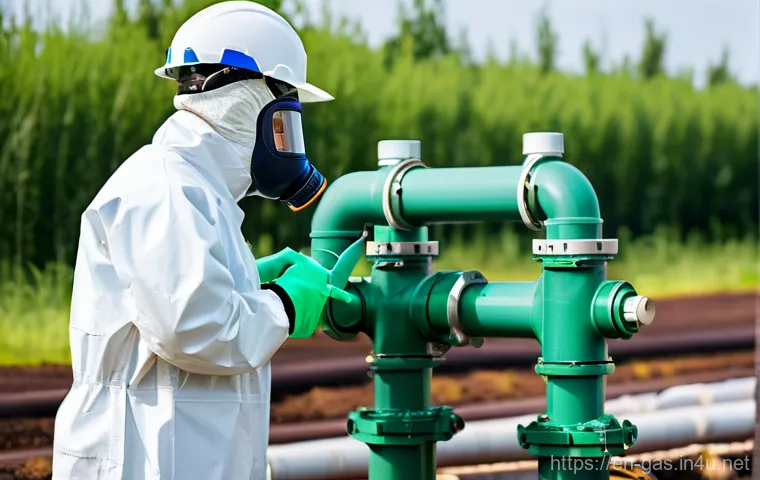
Ah, the bane of many gas engineers: inerts and contaminants. While not always directly combustible, gases like nitrogen and carbon dioxide can significantly impact the performance of your system. They reduce the overall heating value of the mixture, increase the volume of gas that needs to be compressed and transported, and can even contribute to corrosion or other issues. I once dealt with a situation where elevated nitrogen levels in natural gas led to a substantial reduction in the efficiency of a gas turbine power plant. The volumetric flow was there, but the energy content wasn’t! Similarly, contaminants like hydrogen sulfide (H2S) require special handling due to their corrosive nature and toxicity, impacting material selection and safety protocols. Accounting for these “unwanted guests” in your calculations is absolutely critical for both operational efficiency and safety.
Leak Detection Logic: Protecting Assets and the Environment
Let’s talk about something incredibly important that often doesn’t get enough attention in the theoretical world: leak detection. In the real world, gas leaks are not just costly in terms of lost product; they’re environmental hazards and, more critically, serious safety risks. I’ve personally been on sites where a small, unnoticed leak escalated into a significant incident. That’s why understanding the practical calculations and methodologies behind detecting, quantifying, and mitigating leaks is an absolutely vital skill for any gas professional. It’s not just about finding a hole; it’s about understanding the implications of that leak on your system, the surrounding environment, and most importantly, public safety. Being proactive in this area saves lives, protects assets, and demonstrates a commitment to environmental stewardship.
Quantifying Leak Rates and Their Impact
So, you’ve found a leak – now what? The next step is often to quantify it. How much gas are you actually losing? This isn’t just for accounting; it helps prioritize repairs. A tiny pinhole leak might be negligible, but a larger crack could be losing hundreds of cubic feet per hour, demanding immediate attention. Calculations here often involve pressure decay tests, flow comparisons, or even more advanced techniques like tracer gas detection. I remember a time when we used a combination of acoustic sensors and specialized calculations based on the pressure drop over a segment of pipeline to pinpoint and quantify a major leak. The precision of the calculation helped us dispatch the right size repair crew and equipment, saving valuable time and minimizing environmental impact. It’s a very practical application of your theoretical knowledge.
Strategies for Leak Prevention and Mitigation
Of course, the best leak is the one that never happens! This brings us to prevention and mitigation. This isn’t strictly about “calculation” in the traditional sense, but it heavily relies on data-driven decisions that are derived from calculations. For instance, understanding stress points in pipes, corrosion rates, or the lifespan of seals and gaskets, all informed by engineering calculations, helps you implement preventative maintenance schedules. I’ve been involved in risk assessments where we modeled potential leak scenarios and their impact, using those calculations to justify investments in better materials, advanced inspection technologies, and enhanced emergency response plans. It’s about being proactive, using your understanding of gas properties and system dynamics to build a robust and resilient infrastructure. This is where your expertise truly shines, not just fixing problems, but preventing them from ever occurring.
Navigating Regulatory Compliance Through Smart Math
Look, if you’re working in the gas industry, regulations are your constant companion. And honestly, it’s not just about ticking boxes; it’s about ensuring that every component, every process, and every calculation you make aligns with established safety standards and environmental mandates. I’ve seen companies get into serious trouble, facing hefty fines and reputational damage, simply because they didn’t adequately understand or apply the mathematical underpinnings of regulatory compliance. From pipeline safety codes to emissions reporting, almost every regulation has a quantitative element. Your ability to correctly interpret these requirements and translate them into accurate calculations is absolutely critical. It’s less about memorizing laws and more about understanding the math that proves you’re operating safely and responsibly. This is where your technical expertise directly translates into legal and ethical adherence.
Calculating Maximum Allowable Operating Pressure (MAOP)
One of the most fundamental regulatory calculations you’ll perform is determining the Maximum Allowable Operating Pressure, or MAOP. This isn’t a number you just pull out of thin air; it’s rigorously calculated based on the pipe’s material strength, wall thickness, diameter, and the specific design factor dictated by the regulatory body for your pipeline’s class location. If you exceed this, even momentarily, you’re not just risking safety; you’re in direct violation of federal or state regulations. I remember a project where we inherited an old pipeline and had to re-calculate its MAOP because the original documentation was incomplete. It involved meticulous review of historical data, material certifications, and precise calculations. It was a tedious process, but absolutely essential to ensure we were operating within safe and legal limits. This is where precision in math directly equates to compliance and safety.
Emissions Reporting and Environmental Footprint Calculations
The gas industry faces increasing scrutiny regarding its environmental impact, and rightly so. This means emissions reporting is no longer a peripheral task; it’s a central pillar of operations. Calculating greenhouse gas emissions, fugitive emissions from leaks, and other air pollutants requires a solid grasp of stoichiometry, flow rates, and specific emission factors. These calculations feed directly into environmental reports that are legally mandated and publicly scrutinized. I’ve worked with teams developing sophisticated models to track and predict emissions from various sources, using these calculations to identify areas for improvement and demonstrate environmental responsibility. It’s complex, but vital work, and your ability to accurately crunch these numbers makes a tangible difference in how a company is perceived and regulated. It truly ties back to the bigger picture of sustainability and corporate responsibility.
Optimizing Storage and Transmission Efficiency
Let’s talk about getting the most out of your gas infrastructure. In today’s energy landscape, efficiency isn’t just a buzzword; it’s a bottom-line driver. Whether it’s optimizing the performance of a massive underground storage facility or fine-tuning a long-distance transmission pipeline, every calculation you make directly impacts operational costs, delivery reliability, and ultimately, profitability. I’ve spent years analyzing systems where seemingly small inefficiencies compounded over time into significant financial drains. This is where your analytical skills and ability to apply complex equations really pay off. We’re constantly looking for ways to move more gas, store it more effectively, and do it all with less energy and fewer losses. It’s an exciting challenge because there’s always room for improvement, and your calculations are the key to unlocking those gains. Trust me, the companies that prioritize this meticulous approach are the ones thriving in a competitive market.
Maximizing Storage Capacity and Withdrawal Rates
When you’re dealing with natural gas storage, whether it’s underground caverns or LNG tanks, it’s a delicate dance of pressures, temperatures, and volumes. You want to maximize the amount of gas you can store and, crucially, be able to withdraw it at peak demand times. This involves calculations related to compressibility factors, reservoir dynamics for underground storage, and heat transfer for cryogenic storage. I remember working on a project to optimize an LNG terminal, and our calculations helped us determine the ideal send-out pressure and temperature profiles to maximize the usable capacity of the tanks during periods of high demand. It’s not just about how much fits in; it’s about how quickly and efficiently you can get it out when needed, and that’s all based on precise mathematical modeling of fluid behavior under extreme conditions.
Energy Consumption and Compression Optimization
Compressors are the workhorses of gas transmission, but they’re also massive energy consumers. Optimizing their operation is paramount for efficiency. This involves complex thermodynamic calculations, understanding compressor performance curves, and analyzing pressure ratios and temperatures to ensure they’re operating at their most efficient point. I’ve seen situations where simply adjusting the staging of compressors or fine-tuning their speed based on real-time flow data, all driven by calculations, resulted in significant reductions in fuel gas consumption. It’s truly incredible how much energy can be saved by meticulously analyzing the system’s performance and making data-driven adjustments. This isn’t just about saving a few bucks; it’s about reducing your carbon footprint and operating a leaner, greener pipeline. These are the kinds of optimizations that really make a difference.
| Parameter | Common Imperial Units | Common Metric Units | Typical Conversion Factor (Imperial to Metric) |
|---|---|---|---|
| Pressure | psi (pounds per square inch) | kPa (kilopascals) or bar | 1 psi ≈ 6.895 kPa |
| Flow Rate (Volumetric) | SCF/hr (Standard Cubic Feet per hour) | m³/hr (cubic meters per hour) | 1 SCF ≈ 0.0283 m³ |
| Flow Rate (Mass) | lb/hr (pounds per hour) | kg/hr (kilograms per hour) | 1 lb ≈ 0.4536 kg |
| Temperature | °F (Fahrenheit) or °R (Rankine) | °C (Celsius) or K (Kelvin) | (°F – 32) * 5/9 = °C |
| Energy Content | BTU (British Thermal Unit) | J (Joule) or MJ (Megajoule) | 1 BTU ≈ 1055 J |
| Pipe Diameter | inches (in) | millimeters (mm) | 1 inch = 25.4 mm |
Wrapping Things Up
Well, we’ve covered a lot of ground today, haven’t we? From the foundational principles of flow and pressure to the critical details of gas mixtures, pipe sizing, and even the vital aspects of leak detection and regulatory compliance, it’s clear that gas system engineering is a field built on precision and meticulous calculation. What I truly hope you take away from all this is that it’s not just about memorizing formulas; it’s about understanding the “why” behind every number, every design choice. Every calculation we make has real-world implications, affecting safety, efficiency, and the bottom line. So, keep that curiosity alive, keep questioning, and always strive for that deeper understanding. The gas world is dynamic, challenging, and incredibly rewarding for those who truly master its mathematical heartbeat.
Handy Information You’ll Be Glad to Know
1. Always double-check your units! This might sound basic, but trust me, mixing up imperial and metric units has caused more headaches (and costly errors!) than I care to admit. Before you even start a calculation, confirm all your inputs are in a consistent system. It’s a small habit that saves huge grief down the line. I’ve personally seen projects stall for days because of a simple unit conversion mistake. Getting it right from the start is paramount.
2. Factor in real-world conditions. Ideal gas laws are great for theory, but real gases behave differently under pressure and temperature extremes. Always use compressibility factors and consider non-ideal gas behavior, especially in high-pressure or cryogenic applications. Forgetting this can lead to significant discrepancies between your calculations and actual system performance, which can be frustrating to troubleshoot later on. Experience has taught me that the field is rarely as neat as the textbook.
3. Don’t underestimate material properties. The type of pipe material, its roughness, and its long-term integrity against corrosion or fatigue are critical. These properties directly influence friction factors, maximum allowable pressures, and ultimately, the lifespan of your system. Always refer to manufacturer specifications and relevant industry standards. A small cost saving on materials upfront can lead to enormous expenses and safety risks down the road.
4. Embrace simulation tools. While manual calculations are foundational, modern simulation software can be an absolute game-changer for complex systems. These tools allow you to model various scenarios, optimize designs, and predict performance with incredible accuracy, saving time and preventing costly errors. I’ve found that using these alongside a strong understanding of the underlying math helps validate designs and identify potential issues before they ever become real problems in the field.
5. Prioritize safety margins. When designing and operating gas systems, always build in adequate safety factors. This isn’t just a regulatory requirement; it’s a fundamental principle of good engineering. Unexpected surges, material degradation, or unforeseen operating conditions can push a system to its limits. Generous safety margins provide a buffer against the unknown, ensuring reliable and secure operation even when things don’t go exactly as planned. Better safe than sorry is a mantra I live by.
Key Takeaways
To truly excel in the realm of gas systems, a deep understanding of core mathematical principles is absolutely indispensable. We’ve highlighted today that mastering flow rates and pressure dynamics isn’t just about academic knowledge; it’s about safeguarding operations, optimizing efficiency, and ensuring safety in every project. Understanding BTU content and the nuances of gas mixtures allows for precise energy management, while astute pipe sizing is crucial for both performance and cost-effectiveness. Furthermore, effective leak detection strategies protect both assets and the environment, underscoring our responsibility as engineers. Finally, navigating the complex landscape of regulatory compliance demands a meticulous application of mathematical rigor, ensuring all operations meet legal and ethical standards. Ultimately, optimizing storage and transmission efficiency through smart calculations is what drives profitability and sustainable practice. It’s a journey of continuous learning, where every calculation contributes to a safer, more efficient energy future.
Frequently Asked Questions (FAQ) 📖
Q: What are the absolute must-know calculations in the gas industry today, and how do they impact our daily operations and the bigger picture of energy?
A: Oh, this is such a critical question, and one I’ve personally seen make or break projects! When you’re out there, whether in the field or at the desk, there are a few foundational calculations that you simply have to nail.
We’re talking about things like gas flow rates, understanding pressure drop, and accurately determining energy content (think BTUs or therms). These aren’t just academic exercises; they are the bedrock of safe and efficient operations.
Getting flow rates right means you know exactly how much gas is moving through your pipelines, which is vital for meeting demand and preventing bottlenecks.
I’ve felt that sense of relief when I’ve cross-checked flow rate calculations and known we’re on target. Pressure drop calculations? Absolutely essential!
They tell us how much pressure is lost over a certain distance in a pipeline, which directly impacts pipeline sizing and compressor station placement.
A misstep here can lead to costly inefficiencies or even safety hazards. And calculating energy content is how we actually measure the value of the gas we’re transporting and selling.
It’s not just about volume anymore; it’s about the energy delivered, especially as we blend in new energy sources. These calculations aren’t just numbers on a page; they’re the language of the gas industry, ensuring safety, optimizing resource utilization, and ultimately keeping our communities powered and warm.
Trust me, mastering these gives you absolute confidence in your work, every single time.
Q: With all the talk about smart grids and green energy, how does this affect the calculations we do, and how can we adapt to stay ahead?
A: This is where things get really exciting, and a bit more complex, but in a good way! I’ve been watching this shift firsthand, and it’s clear that smart grids and green energy aren’t just buzzwords; they’re fundamentally changing how we approach gas calculations.
For starters, smart grids are all about real-time data. This means our calculations are becoming far more dynamic. Instead of static models, we’re now working with continuous streams of information from IoT sensors on everything from pipeline conditions to consumption patterns.
This allows for much more precise flow optimization, advanced leak detection, and predictive maintenance – all of which rely on real-time, intricate calculations to keep the system humming.
I’ve felt the thrill of seeing a smart system flag a potential issue long before it became a problem, all thanks to these constant, automated calculations.
As for green energy, integrating renewables like hydrogen or biogas into our existing natural gas networks introduces a whole new layer of calculation complexity.
We’re now calculating emission reductions, optimizing energy blending ratios, and ensuring overall system efficiency and reliability across diverse energy sources.
It’s no longer just about calculating natural gas properties; it’s about understanding how different energy carriers interact and how to maximize their combined potential.
To stay ahead, my best advice is to embrace continuous learning, get comfortable with data analytics tools, and always be open to new software that can handle these more complex, multi-faceted calculations.
The landscape is evolving fast, and our skills need to evolve with it!
Q: What are some of the sneakiest, most common calculation mistakes people make in the field, and what’s your best advice to avoid them and ensure our work is bulletproof?
A: Oh, I could write a book on this one! I’ve seen some head-scratchers over the years, and it’s often the small, “sneaky” errors that cause the biggest headaches.
The absolute most common one I’ve encountered is unit conversion mistakes. Seriously, it sounds so basic, but switching between PSI and kPa, or cubic feet and cubic meters, without meticulous conversion can throw an entire project off.
Another big one is forgetting to convert temperatures to Kelvin when using the ideal gas law or other gas equations. I’ve personally made that slip-up early in my career, and the results were, shall we say, “educational” when they didn’t match reality!
Rounding errors are also surprisingly common, especially in multi-step calculations; rounding too early can accumulate errors that significantly impact your final result.
Sometimes, people also make incorrect assumptions about gas composition or deviation factors, leading to imprecise energy content or flow rate figures.
The ripple effect of these seemingly minor errors can be huge, affecting safety, budgets, and operational efficiency. My bulletproof advice? First, always double-check your units and convert everything consistently at the start.
Second, keep those extra decimal places during intermediate steps in complex calculations. Third, and perhaps most importantly, truly understand the principles behind the formulas.
Don’t just plug and chug; know what each variable represents and why it’s there. And finally, when possible, use multiple methods or tools to verify your results, especially on critical calculations.
A second set of eyes, or a trusted software, can be a lifesaver. It’s all about attention to detail and a healthy dose of professional skepticism to catch those tricky errors before they cause real problems!